Pound for Pound: UK's Censorship Leaves U£ Blind
The UK's Struggle Between Security and Freedom
By Joshua Abrams • February 2025
The UK is currently at a crossroads, facing increasing challenges in balancing national security, civil liberties, and social cohesion. The fallout from the Southport knife attack in July 2024 is a glaring example of this tension.
A tragic incident in which three children were killed during a Taylor Swift-themed dance class was quickly weaponized by misinformation online. False reports that the attacker was a Muslim migrant fueled riots, mosque attacks, and left over 50 police officers injured. The UK government's response has been swift and severe, but it raises troubling questions about the balance between public safety and civil liberties.
The Knife Crime Crisis and Cultural Tensions
The UK's knife crime epidemic isn't just a statistic—it's a crisis that's fueling deep-seated divisions in British society. With over 50,000 knife attacks annually, many of these crimes have been linked to migrant communities and, in particular, young men from Muslim-majority backgrounds. This correlation, whether fairly assessed or not, has sparked fierce debate over immigration, integration, and the limits of multiculturalism.
The Rising Tensions: Fear, Racism, and Community Defensiveness
For many British citizens, the rapid cultural shift—combined with an increase in crime—has led to feelings of alienation and fear. This isn't just xenophobia or blind hatred; it's a reaction to real changes happening in communities where crime rates have surged, local identities have eroded, and political correctness has made it nearly impossible to discuss the issue without accusations of racism.
On the other hand, many Muslim communities feel unfairly blamed, seeing the backlash as an excuse for blatant Islamophobia. Hate crimes against Muslims have skyrocketed, fueled by social media narratives that equate all migrants or Muslims with crime. This creates a vicious cycle: more defensiveness from these communities, more radicalization, and more division—all while the government struggles to find a balance between security and inclusivity.
Foreign Influence Alert:
Reports of Russian and Chinese disinformation campaigns targeting UK elections suggest that foreign influence may be exacerbating domestic tensions, including incidents like the Southport riots. By amplifying social division, external actors may be strategically fueling unrest to destabilize other nations including the U.S.A and the U.K.
The Overcorrection: Woke Policies and Special Privileges
Instead of addressing these tensions with measured policies, the UK government and progressive movements have swung to the other extreme—pandering to Muslim communities with special privileges that fuel resentment among native-born Britons. Examples include:
- Religious Education in Schools: Islamic teachings and prayers being integrated into public school curriculums, often while Christian traditions are being sidelined or removed altogether.
- Cultural Exceptions in Law Enforcement: Some areas see police hesitant to enforce laws on religious or cultural grounds, leading to double standards in justice.
- Public Funding for Religious and Cultural Initiatives: While British citizens struggle with rising taxes and crumbling services, millions are funneled into initiatives that primarily benefit migrant communities.
To many, it feels like the government is prioritizing diversity optics over national cohesion, allowing certain groups to rewrite the cultural landscape while ignoring the growing discontent among long-standing citizens.
The Need for Balance: Supporting Diversity Without Losing National Identity
There has to be a middle ground—one that recognizes the benefits of diversity while protecting the core values and identity of British society. Multiculturalism can only work if it integrates rather than replaces the existing culture. Policies should be designed to:
- Ensure equal treatment under the law, rather than making exceptions for religious or cultural reasons.
- Allow cultural expression without forced integration into public institutions like schools and government policies.
- Prioritize security over political correctness, ensuring that crime is addressed regardless of the background of the perpetrators.
British citizens should not be expected to watch their country transform into something unrecognizable, all in the name of forced diversity. A fair, just society supports everyone—without enabling lawlessness, special privileges, or the erosion of national identity.
Government Overreach: Laws Targeting Free Speech
In response, the UK government has tightened laws designed to combat online extremism and misinformation. However, many of these laws have led to unintended consequences, including the suppression of free speech and targeting of religious minorities. The introduction of the Online Safety Act 2023, alongside older laws like the Public Order Act 1986 and Communications Act 2003, has sparked widespread concern over government overreach.
Laws at the Heart of the Debate
Public Order Act 1986
- Criminalizes "threatening, abusive, or insulting" behavior that causes distress (Section 4A) or is likely to cause "harassment, alarm, or distress" (Section 5).
- Recent amendments enforce buffer zones around abortion clinics, where even silent prayer can result in fines (e.g., Adam Smith-Connor fined in Bournemouth, 2024).
- Issue: Vague definitions allow authorities to suppress speech and religious expression arbitrarily.
Communications Act 2003 (Section 127)
- Makes it a criminal offense to send "grossly offensive, indecent, obscene, or menacing" messages online.
- Applied in cases like a Manchester resident jailed in 2024 for a tweet criticizing the police.
- Issue: Subjective enforcement, where authorities determine offensiveness, leading to censorship of dissenting views.
Terrorism Act 2000 & 2006
- Criminalizes possession of "useful" terrorist-related material and "encouraging" terrorism, including "glorification."
- Used to arrest Sarah Wilkinson in 2024 for pro-Palestine social media posts.
- Issue: Broad definitions disproportionately target Muslims and activists expressing political opinions.
Online Safety Act 2023
- Enforces removal of "harmful" online content, including hate speech and misinformation.
- Already being used to censor posts critical of government policies.
- Issue: Over-deletion by tech platforms to avoid penalties, leading to suppression of legitimate political discourse.
Legal Rights and Pathways for Action
Despite increasing legal restrictions, UK citizens have options to challenge overreach:
Human Rights Act 1998
- Article 9: Protects freedom of thought, conscience, and religion.
- Article 10: Guarantees free expression, with restrictions requiring strong justification.
- Article 14: Prohibits discrimination in exercising these rights.
Judicial Review
- Citizens can challenge government actions in the High Court if they are unlawful, irrational, or procedurally unfair.
- Time Limit: 3 months (6 weeks for PSPO-related cases).
Political Engagement
- Petitioning Parliament: 10,000 signatures for a government response; 100,000 for a parliamentary debate.
- Voting: Supporting MPs or parties advocating for civil liberties (e.g., Reform UK, certain independents).
Media Coverage and Documentation
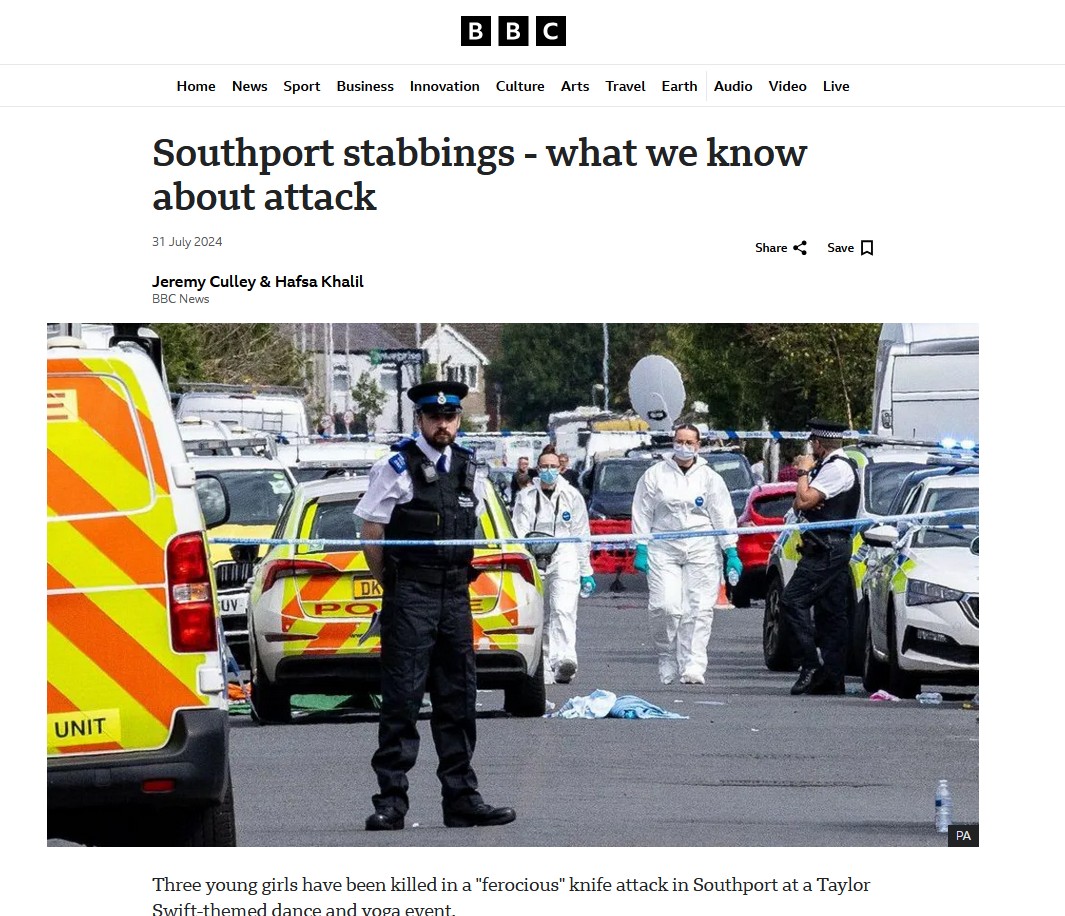
BBC coverage of the Southport stabbings that sparked nationwide controversy
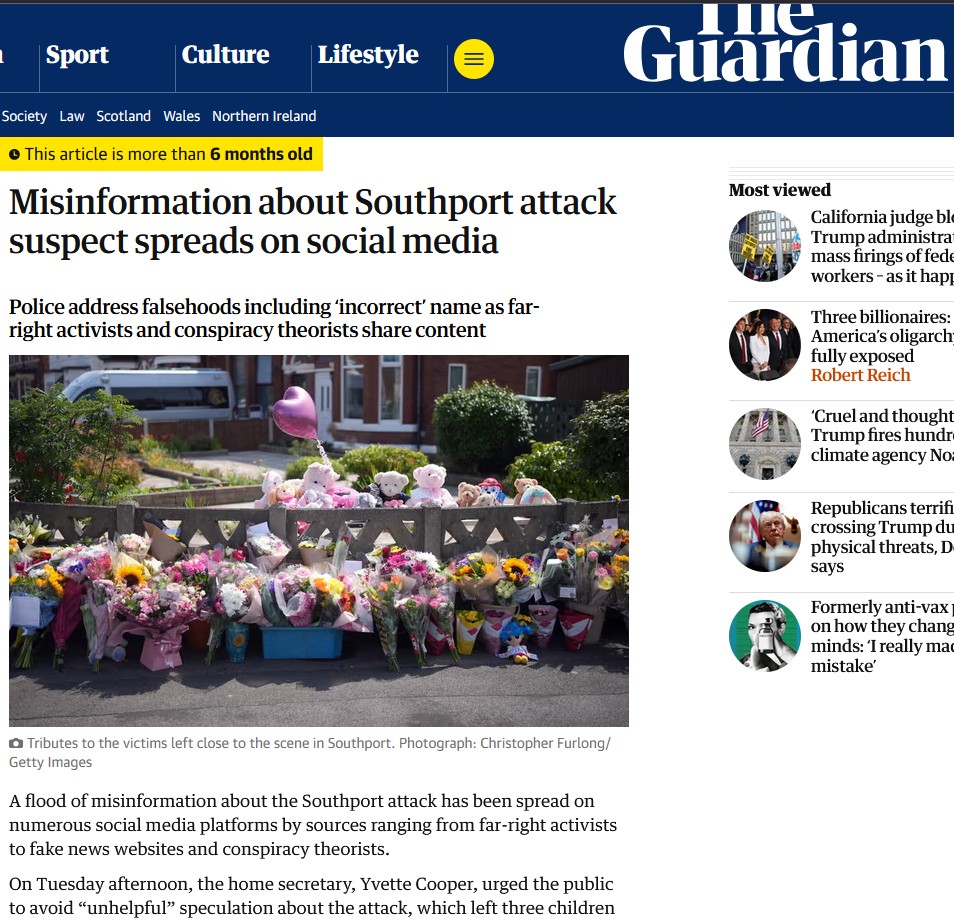
Guardian report on misinformation spreading across social media platforms
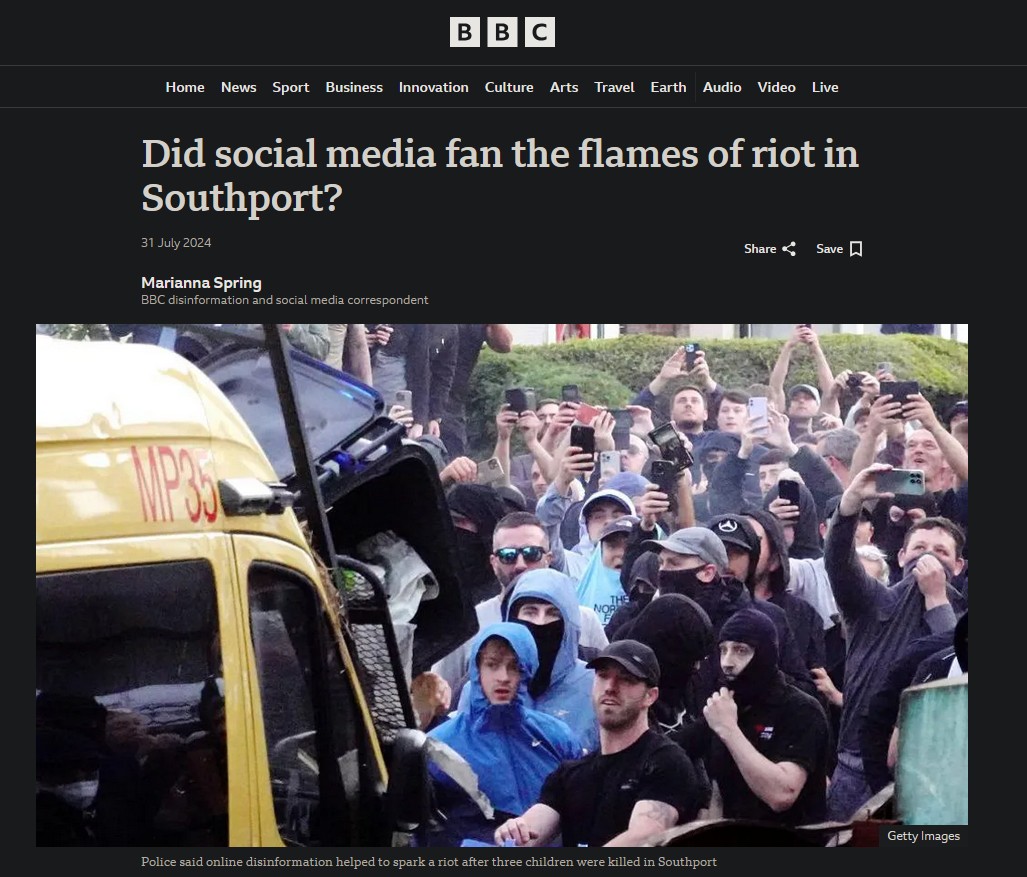
BBC investigation into social media's role in fanning riot flames
UK flag with 'CENSORED' overlay highlighting free speech concerns
Click any image to view full size
Parallels with the United States
Recent revelations in the United States have exposed a troubling pattern of state-backed protest manipulation, raising serious concerns about the possibility of similar tactics being employed in the UK.
- The Guardian (2023) revealed that FBI informant Michael Windecker infiltrated Black Lives Matter protests, actively encouraging violence to provide justification for heavy-handed law enforcement crackdowns.
- ZeroHedge (2020) and FOIA documents uncovered evidence of pallets of bricks mysteriously appearing at protest sites, fueling speculation that these materials were strategically placed to incite riots by unknown actors.
- Judicial Watch (2021) exposed significant government funding of NGOs linked to migrant surges and civil unrest, raising further questions about potential orchestration behind seemingly organic movements.
Could similar state-driven manipulation be at play in the UK? Reports of Russian and Chinese disinformation campaigns targeting UK elections suggest that foreign influence may be exacerbating domestic tensions, including incidents like the Southport riots.
Many political and private organizations, both domestic and foreign, appear to exploit these dynamics for their own gain—whether through selling merchandise, securing votes, or fueling extremism and its inevitable backlash. The real question is: who truly profits from this chaos? Follow the money, and the beneficiaries become clear.
US Legal Framework Comparison
While the United States has First Amendment protections for free speech, even these rights have clear limits when it comes to incitement. The Patriot Act grants the government broad authority to classify individuals as terrorists if they are found to be promoting violence or vigilantism, regardless of whether an actual or actionable threat exists.
This legal framework allows the state to intervene swiftly, often without trial, using national security carveouts that override conventional due process. In essence, while free speech is a constitutional right, the U.S. government has drawn a firm line in the sand—any language promoting violence, extremism, or insurrection is aggressively prosecuted, even absent tangible action.
Conclusion
The UK's ongoing struggle to balance national security, free speech, and social cohesion is emblematic of broader global tensions. The rise in crime, government overreach, and cultural clashes has fueled division, but the solution cannot be found in authoritarianism or unchecked multiculturalism.
True progress lies in measured, evidence-based policies that protect fundamental rights while ensuring safety for all citizens. This is not about choosing one extreme over another but about finding a sustainable and fair approach that fosters unity, peace, and prosperity.
Understanding the parallels between the UK and the US can offer valuable lessons in maintaining national security without compromising civil liberties. By advocating for legal reform, civic engagement, and accountability, societies can cultivate environments where diverse communities coexist without undermining national identity or fundamental freedoms.
For more up-to-date articles and pressing current issues, follow us and share your tips at our nonprofit news advocacy group: TrueJust Media or TrueJust. or follow our mission @TrueJustOrg
Legal Disclaimer: Just Liberty Incorporated is a nonprofit charitable organization devoted to political and legal reform and advocacy worldwide. We are not licensed attorneys and do not provide legal advice. All information, sources, and opinions shared in this document are intended to foster debate, raise awareness, and help secure funding for proper legal and policy resources.
Read Full Articles On:
Sources & References
1. Southport Stabbings Details
BBC News - July 30, 2024
https://www.bbc.com/news/articles/cy68z9dw9e7o2. Southport Disinformation Spread
The Guardian - August 1, 2024
https://www.theguardian.com/uk-news/article/2024/jul/30/misinformation-southport-attack-suspect-social-media-conspiracy-theories3. UK Online Speech Arrests
The Telegraph - February 2025
https://www.telegraph.co.uk/news/2025/02/15/hundreds-charged-speech-crimes-jd-vance-warns-civil-liberty/4. Human Rights Act Overview
Liberty Human Rights - March 2024
https://www.libertyhumanrights.org.uk/your-rights/the-human-rights-act/