Sick Sad World
By Joshua Abrams • February 3, 2025
Systems Engineer & Administrator
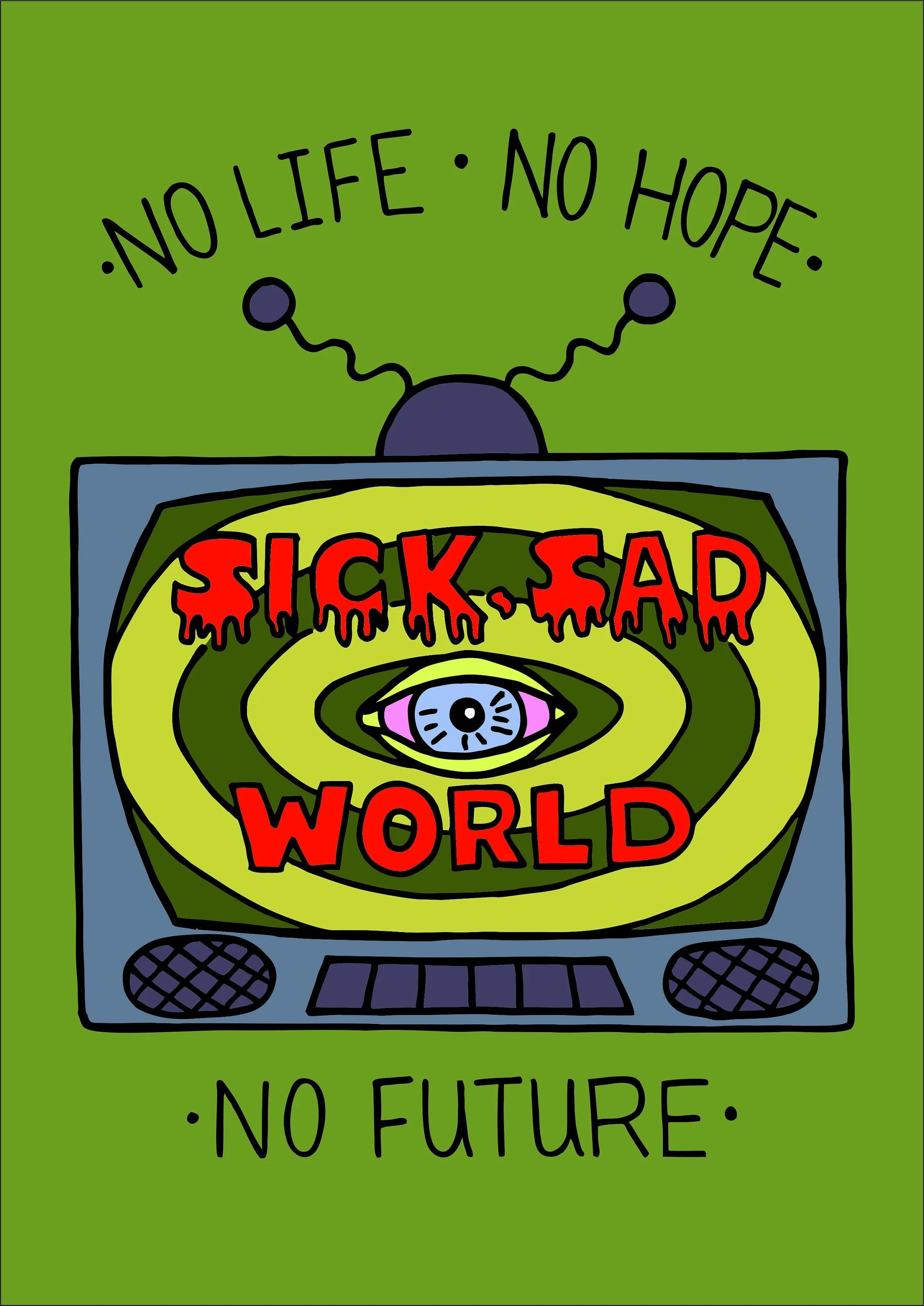
Click image to view full size
Welcome to the modern Sick Sad World, where incompetence reigns, progress stalls, and we're left wondering how society fell so far off the rails. Everywhere we look, it's evident that generations of systemic failure, pollution, and unchecked greed have created a perfect storm of decline. From our poisoned environment to our poisoned leadership, it's no wonder we're living in a reality that feels less like progress and more like the aftermath of a bad experiment.
Leadership in Decline
Let's start with the leadership—or what's left of it. In 2024, we have representatives like Kay Granger, 81, who is reportedly living in an assisted memory care facility due to dementia. Despite her condition, she still holds office and represents constituents, because apparently cognitive decline doesn't disqualify you from making laws for millions of people. She's not alone in this, either—senators in their 80s are falling down stairs, losing their power of attorney, and making decisions that affect generations they won't live to see the consequences of.
Financial Catastrophe
This decay isn't limited to our leadership—it's woven into the very fabric of our society. The U.S. national debt has surpassed $22.6 trillion, meaning every household carries the burden of approximately $172,000 in debt.
Programs like Social Security, which once offered a promise of stability, are projected to collapse by 2035, leaving future retirees facing a 25% reduction in benefits. This is the financial legacy we're inheriting: a mountain of debt and broken promises, while those responsible sail off into sunset retirements funded by the very systems they helped destroy.
Environmental and Physical Poisoning
But why stop at financial rot when we can talk about literal brain rot? For decades, we poisoned ourselves with leaded gasoline, lead-based paints, and contaminated water—all because someone decided efficiency mattered more than human health. Generations of people grew up breathing toxins, and now we're seeing the long-term effects: skyrocketing rates of dementia, Alzheimer's, and a collective inability to separate fact from fiction. Is it any surprise that so many people can't think critically when their brains have been marinated in lead for decades?
Genetic and Social Bottlenecks
Speaking of generational failures, let's address the long-term effects of inbreeding—yes, inbreeding. Small towns and limited social options have created bloodlines so diluted by second and third cousin marriages that we're now seeing the consequences in global genetic bottlenecks. This isn't just about health issues; it's about the slow erosion of innovation, resilience, and the ability to adapt. When the genetic pool shrinks, so does the capacity for creativity and problem-solving—traits we desperately need to navigate the crises ahead.
Generational Complicity
And let's not pretend younger generations are blameless. Millennials and Gen Z are just as guilty of feeding into these broken systems. We've turned to the stock market to chase quick returns, profiting off the same industries that are destroying the planet and society.
Instead of building something better, we've chosen to play the same rigged game, hoping to cash out before it all collapses.
Healthcare System Breakdown
This brings us to the healthcare system, a shining beacon of American dysfunction. The tragic case of Luigi Mangione, who allegedly murdered UnitedHealthcare CEO Brian Thompson, is just one example of how the pressure cooker of corporate greed can explode. CEOs rake in millions while regular people can't afford basic care, and the system continues to prioritize profits over lives. It's a system built on squeezing every penny from people's pain—and it's collapsing under the weight of its own greed.
The Path Forward
So, where does this leave us? In a world where every system—financial, environmental, political, and societal—is on the brink of collapse. Our leaders are clinging to power long past their expiration dates, our debt is suffocating, and generations of people poisoned by greed and pollution can barely function. This isn't just one generation's failure—it's a collective decline.
The question is, what are we going to do about it? Will we continue to cling to the excuse of "this is how it's always been"? Or will we finally wake up, take responsibility, and break the cycle of complacency and decay? If we don't, the sick sad world we're living in now is only a preview of what's to come.
Half the Solution
"Knowing the problem is half the solution" rule or law is often referred to as "a problem well-stated is half-solved," -Charles Kettering, emphasizing that clearly defining and understanding the problem is a crucial step towards finding a solution.
If all I can do is point out the problems, the sickness, and the sadness of our world. We are half way to solving it, it can be a glass half for a better future. OR the last criticism before our collective fall.
I can only do so much alone.
This isn't just commentary—it's a call to action. The systems are broken, but recognition is the first step toward repair.