King Soopers: Heavy Is the Crown That Strikes
How King Soopers & Union Leadership betrayed & insulted 10,000+ Workers
By Joshua Abrams • February 12, 2025
In the wake of a failed merger and a crumbling monopoly strategy, 10,000 King Soopers workers have organized like a military unit to strike for fair treatment.
YET, all the store's doors remain wide open and profits continue to roll in.
I had the chance to speak with a striking worker at my local King Soopers #55. He shared startling details: despite rumors that only deli and produce employees were union members, he revealed that scabs were flown in from other states, complete with paid hotel stays and extra wages, leaving little room for genuine negotiations on fair pay.
He explained that his contract forced him to be on the picket line in the freezing cold, or risk not being paid, his new job duties to stand outside all day, in brutal snow and wind just to safeguard his income and risk losing house and home.
He claimed during the last round of negotiations, union leaders assumed the merger would go through, so discussions stalled, only to have the deal collapse and leave everyone worse off.
Temperature on February 11, 2025: 10 Degrees F
Workers' breath clearly visible, wearing light clothing disproportionate to how cold it was
It was a pleasure speaking with this brave young man. He allowed me to snap a selfie and a photo, though he requested no video recordings out of respect. This hard-hitting, on-the-ground journalism goes beyond a simple fight for better wages and benefits—it exposes what appears to be systemic betrayal, mismanagement, or even outright corruption within the union leadership.
We see a stark reality: workers are not just demanding fair treatment, they are fighting back against a system that seems to have sold them out. The woman on the left expressed she was out here fighting for the benefits to afford basic medication and family support.
COLORED BY COLD AND CORPORATE GREED
In the dead of a brutal Colorado winter, nearly 10,000 King Soopers employees have taken to the streets, braving subzero temperatures to demand fair wages, affordable benefits, and dignified treatment. As these workers shiver on the picket lines, critics say that UFCW Local 7—supposedly the champions of their labor rights—has chosen comfort over confrontation.
A UNION THAT MISSES THE MARK
Under the leadership of President Kim Cordova, UFCW Local 7 represents 23,000 members across Colorado and Wyoming. However, when the strike began, a glaring disparity emerged between the union's public promise and its internal priorities. According to the 2022 Form LM-2 Labor Organization Annual Report, the union's expenditures were allocated as follows:
- Union Administration: $13 million (65% of total expenditures) - Plenty of cash for fancy offices, company cars to ride around in, and make it really easy to collect union dues like a business.
- Representational Activities: $3 million
- General Overhead: $1 million
- Contributions, Gifts, and Grants: $65,000
- Political Activities and Lobbying: $0 !!!!!!
Critics argue that this disproportionate emphasis on administrative costs—essentially salaries, office expenses, and operational overhead—has left workers without adequate strike support such as heated shelters, legal aid, or direct financial relief.
Their actions don't just represent poor management—they undermine the very positions and livelihoods of their own members. In my view, this behavior borders on outright corruption, and even if we give them the benefit of the doubt, it can only be attributed to extreme negligence and mismanagement.
THE BILLION-DOLLAR CONTRADICTION
Meanwhile, King Soopers' parent company, Kroger, continues to thrive. Recent financial reports indicate:
- 2024 Gross Profit: $33.364 billion (a 4.99% increase over 2023)
- 2023 Gross Profit: $31.778 billion (a 4.71% increase over 2022)
- Total 12-Month Profit Ending October 31, 2024: $33.903 billion
If the company truly could not afford to pay its workers better, why is it willing to spend millions flying in out-of-state replacement workers and engage in expensive public relations campaigns—while its employees struggle with stagnant wages and poor benefits? The evidence suggests that profitability isn't the issue; it's a choice to prioritize executive and shareholder interests over the well-being of frontline workers.
THE STRIKE'S TIMING: A CALCULATED CRUELTY
The strike's scheduling raises further questions. Labor negotiations were delayed for months under the banner of an anticipated merger with Albertsons—a deal that ultimately collapsed in December 2024 after a federal judge ruled it violated antitrust laws. Critics contend that this postponement was a deliberate tactic by both Kroger and UFCW Local 7 to minimize pressure on the company while ensuring maximum hardship for workers by forcing them into protest in the midst of winter.
POTENTIAL LEGAL VIOLATIONS AND FRAUDULENT PRACTICES
The unfolding events have prompted serious legal questions regarding the union's responsibilities and the company's tactics. Among the allegations under consideration are:
Legal Analysis
An objective review of the current situation raises serious legal concerns regarding UFCW Local 7's actions. The union may have breached its Duty of Fair Representation (DFR) by delaying negotiations and misallocating funds, thereby failing to adequately serve its members' interests.
Moreover, allocating $13 million to administrative costs while frontline workers endure severe hardships could constitute a misuse of union funds under the Labor-Management Reporting and Disclosure Act (LMRDA). The imposition of harsh working conditions may also give rise to claims of constructive discharge and economic harm, potentially violating state protections such as those outlined in the Colorado Wage Act.
In addition, forcing disabled workers to participate in a strike during extreme weather without proper accommodations might violate the Americans with Disabilities Act (ADA). Finally, if evidence surfaces that suggests collusion between union officials and corporate executives to delay negotiations or undermine worker interests, federal RICO charges could potentially be pursued.
**This analysis is provided as an objective legal overview and is not intended to serve as legal advice or representation, as I am not a lawyer. The intent of this coverage is to educate, reform, and empower civil rights through informed discussion and accountability.
A CALL FOR ACCOUNTABILITY
Workers deserve a union that champions their rights, not one that appears to prioritize bureaucratic comfort over active advocacy. The stark contrast between Kroger's soaring profits and the dire conditions faced by its employees has led many to demand:
- Filing of Unfair Labor Practice (ULP) charges with the NLRB against UFCW Local 7
- A federal audit of the union's financial practices
- Legal action for misrepresentation, lost wages, and constructive discharge
- A thorough investigation into any potential collusion between union leaders and corporate executives
Union members who believe these issues affect their rights should consider reaching out to local legal aid organizations, labor rights groups, or regulatory bodies such as the National Labor Relations Board (NLRB) for further guidance. Likewise, concerned citizens can engage by contacting their local representatives or supporting advocacy organizations dedicated to labor reform and corporate accountability.
Here's what some locals had to contribute on the matter
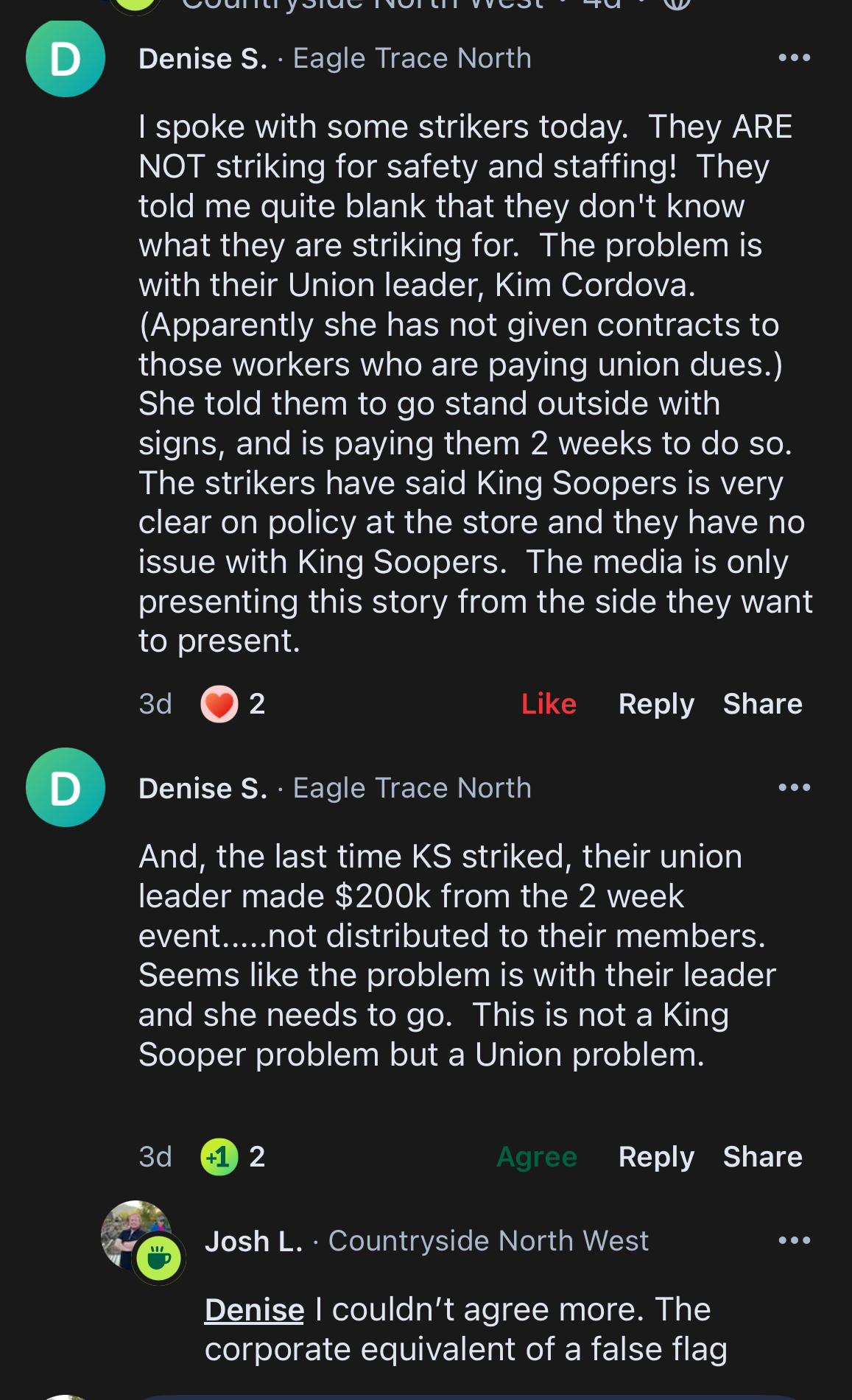
Community feedback from Denise about union leadership concerns
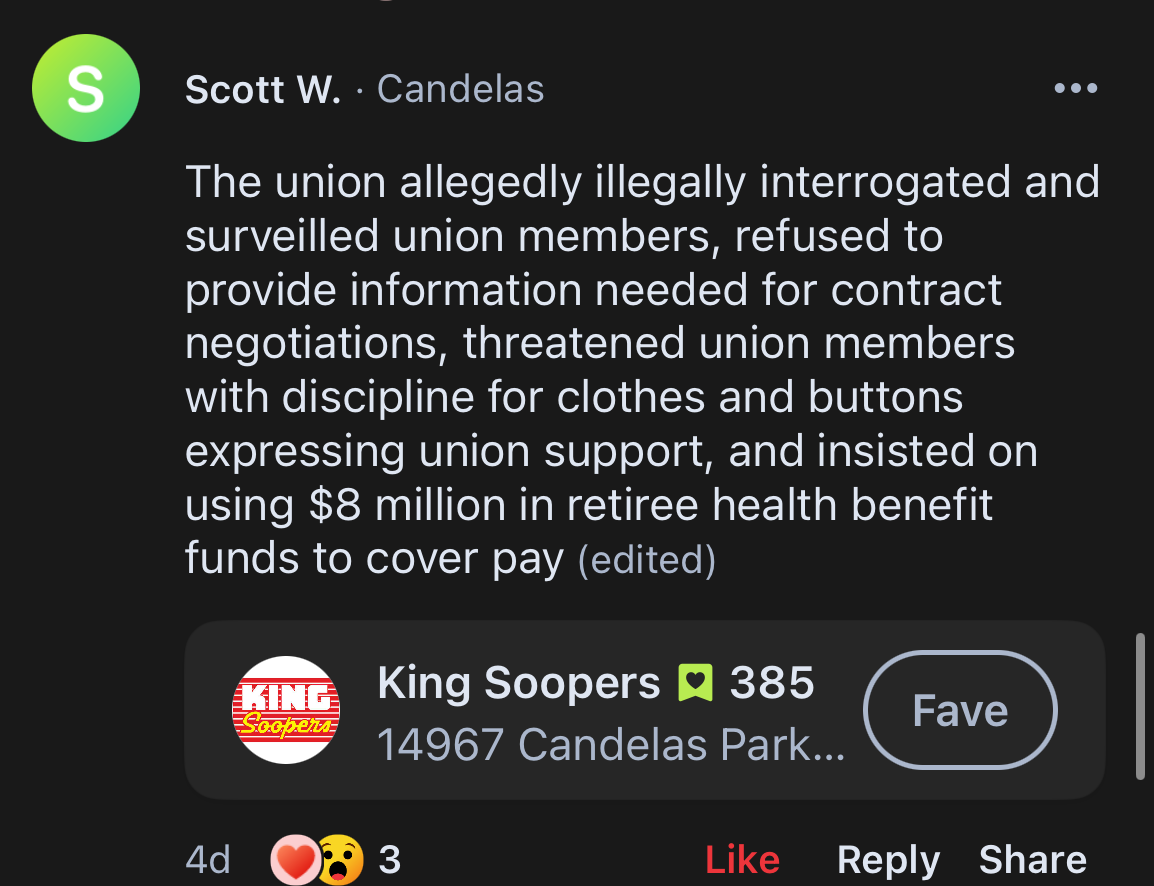
Union allegedly interrogating members and refusing contract information
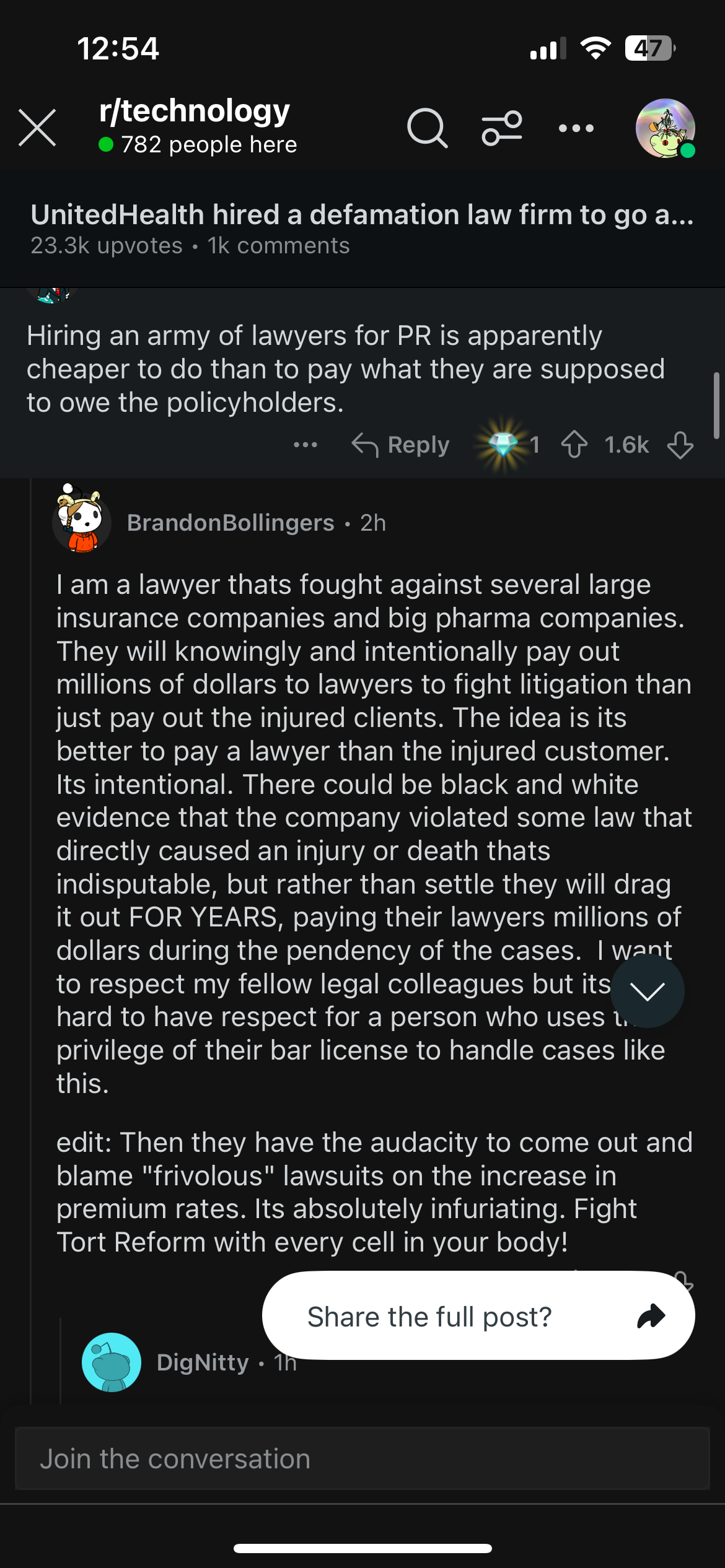
Legal professionals discussing corporate practices and litigation costs
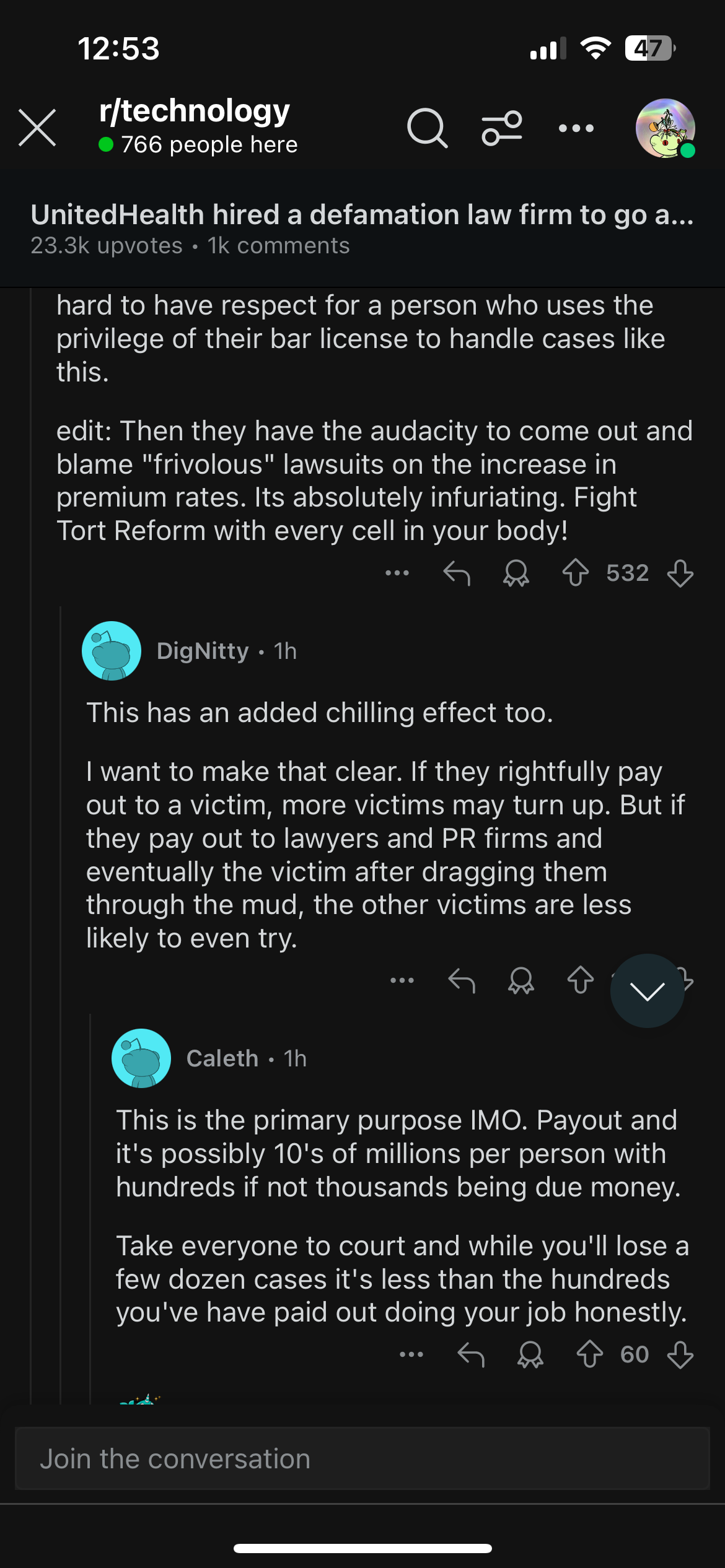
Community discussions about corporate accountability
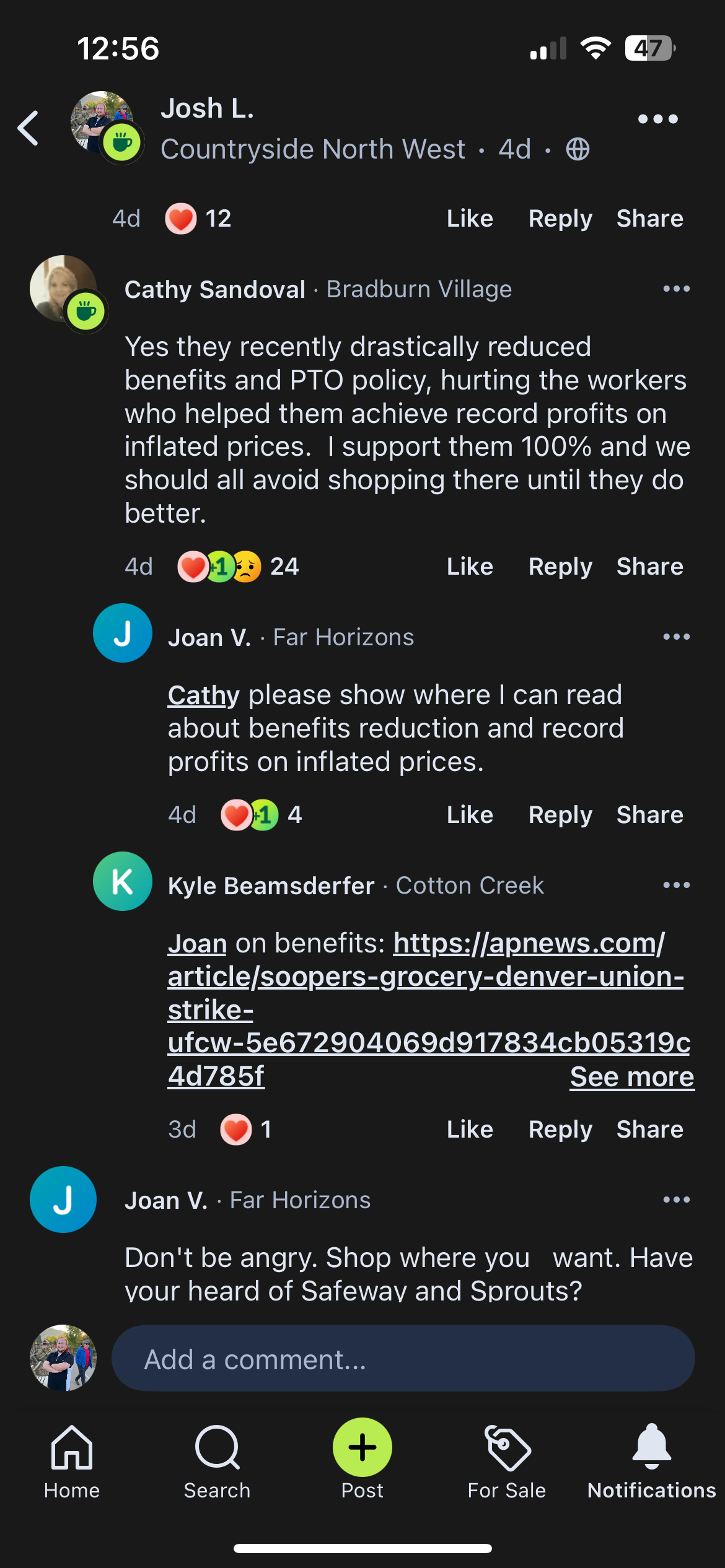
Local residents sharing experiences about worker solidarity
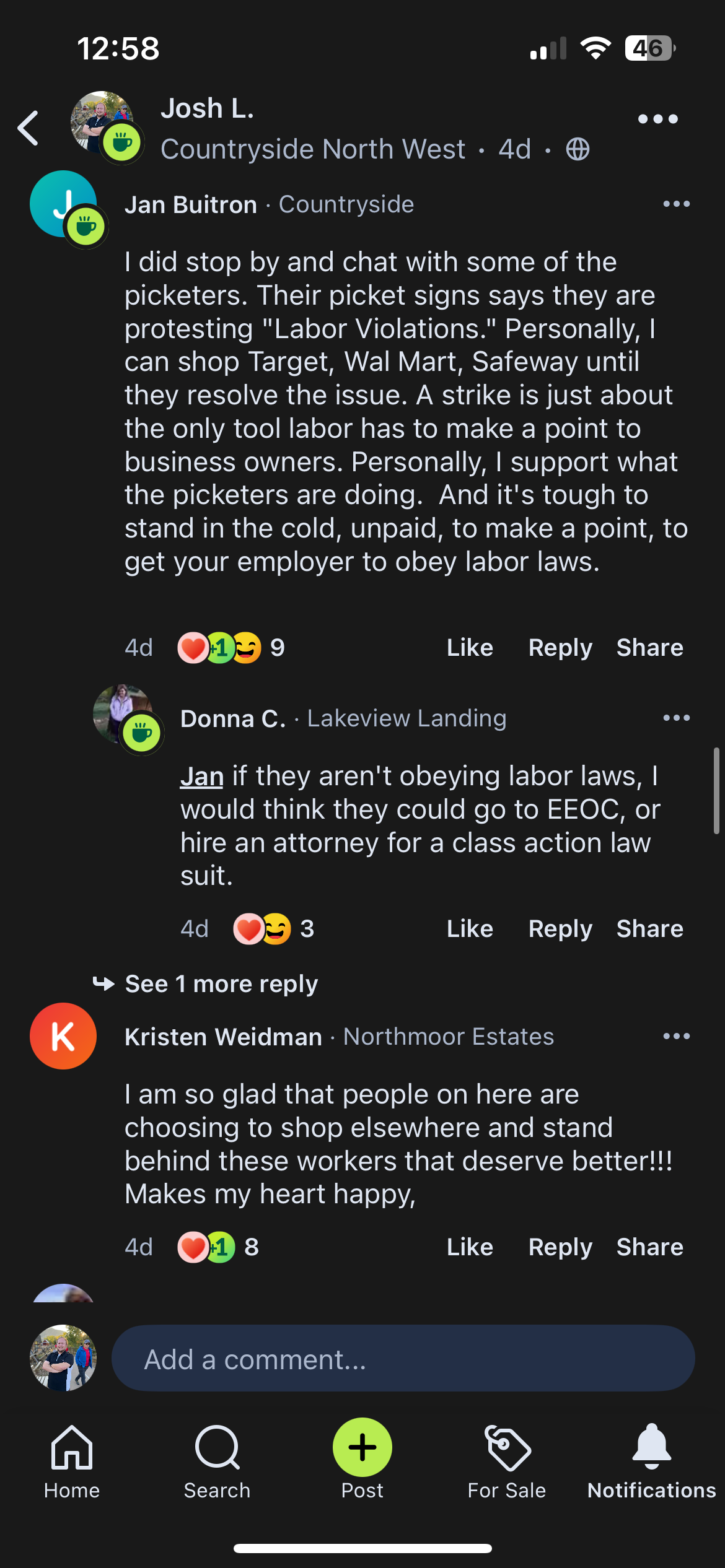
Community members supporting striking workers
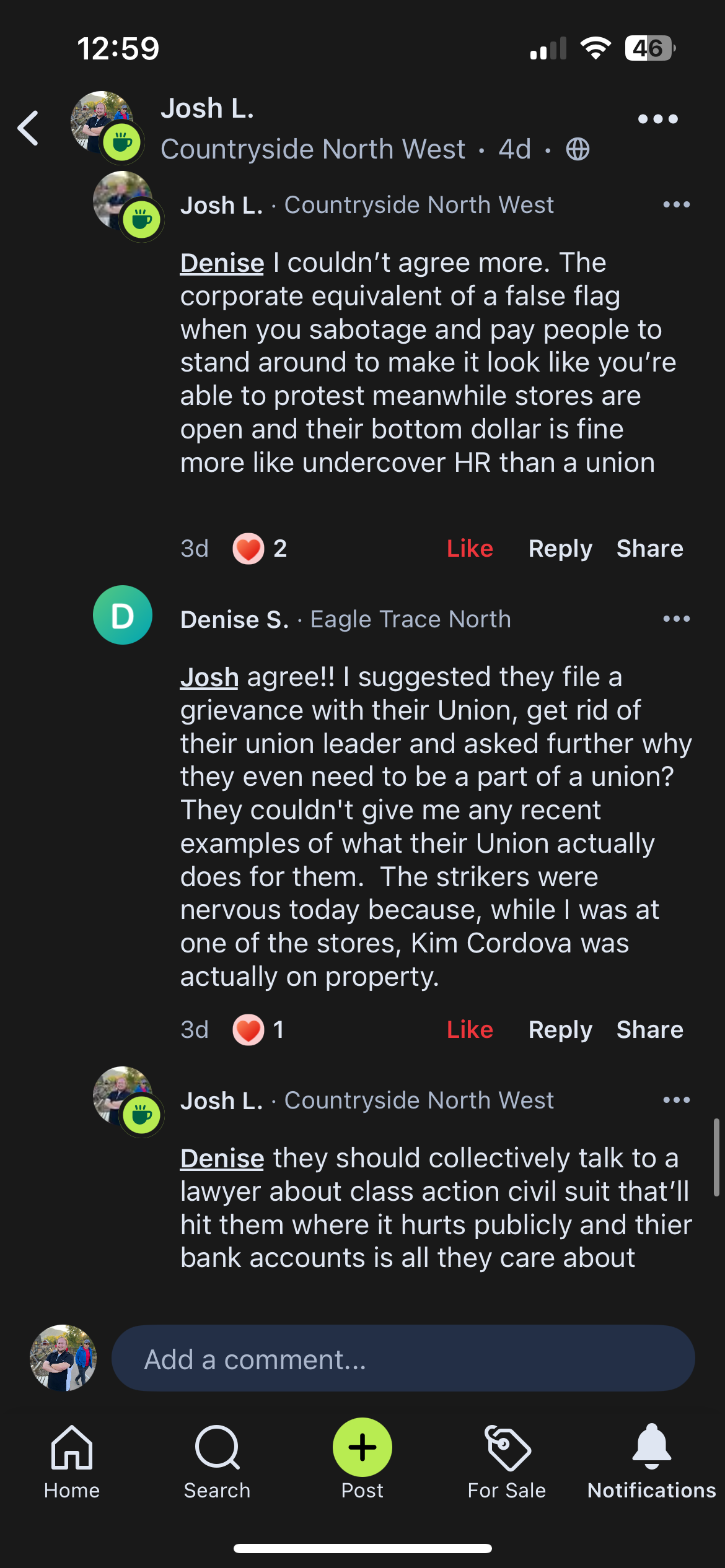
Local discussions about union leadership and worker rights
Click any image to view full size
We already witnessed a federal ruling striking down a merger over monopoly concerns of unchecked power and price setting and now I'm left to ask maybe that's not what they should be in court over arguing for more power and domination, I think better suited justifying these actions to a jury of their peers.
I personally find these actions disgusting. I wonder where are the oversight and legal safeguards and civil rights standards? For many the answer isn't simply boycott, they already have strategic placement and convenience for many struggling to get by already driving miles further or to more expensive areas isn't an option.
I think we need to address these failures in the Union and confront King Soopers CEO's and board of directors publicly and make sure a transparent and good faith deal is achieved. Not only would they save face and restore public opinion their profits would likely go up even more for people supporting their friends, families and local businesses. We can all climb up by helping each other together or scramble and step on the necks of others. Which one seems like the most productive and sustainable, and which do you think we have now?
In closing:
We see an all-too-familiar pattern: executives and union leaders alike are often willing to sacrifice the well-being of the little guy—and, by extension, their own communities—for personal gain. Whether it's stock options, kickbacks, juicy checks, or promises of power, the system seems rigged to benefit those at the top, not just between CEOs and union heads, but within the companies themselves, where unchecked control reigns.
Either way, here's my two cents: help people, report the truth, and stand up for yourself and others. What do you have to say about this?
UPDATE: May 2025 - Kroger's Data Collection Scandal
Yes, it's true that Kroger and its stores like King Soopers are collecting and monetizing customer data through their loyalty programs and other initiatives. Consumer Reports found that Kroger collects data on its 63 million loyalty program members and sells it to third parties, generating significant profit.
This data is used for "precision marketing," allowing Kroger to target specific customers with ads and offers. Kroger's "alternative profit businesses," which include the data-driven precision marketing, contribute a significant portion of their overall profit, according to OregonLive.com.
The Kroger company is also collecting facial recognition data, adjusting prices, and making billions on private consumer data that customers never consented to sharing or monetizing.
For more up-to-date articles and pressing current issues, follow us and share your tips at our nonprofit news advocacy group: TrueJust Media or TrueJust. or follow our mission @TrueJustOrg
Note: The claims and figures mentioned in this article are based on publicly available reports and should be independently verified. This piece represents an opinionated analysis and is intended to provoke debate on union accountability and corporate labor practices.
Read Full Articles On:
Sources & References
UFCW Local 7 Official Website
https://www.ufcw7.org/Official website of UFCW Local 7, where you can find updates, statements, and other resources related to the union's activities.
Federal Register – Labor Organization Annual Financial Reports
https://www.federalregister.gov/documents/2020/10/13/2020-21685/labor-organization-annual-financial-reports-lm-form-revisionsDetails on revisions to the LM reporting forms required for labor organizations, offering insight into how unions disclose their financials.
Department of Labor – Online Public Disclosure Room
https://www.dol.gov/agencies/olms/public-disclosure-roomOfficial portal to search for labor union financial reports, including Form LM-2 filings for UFCW Local 7.
Associated Press Article on King Soopers Strike
https://apnews.com/article/soopers-grocery-denver-union-strike-ufcw-5e672904069d917834cb05319c4d785fDetailed news report covering the ongoing King Soopers strike and UFCW Local 7's role in it.
Teamsters for a Democratic Union – Latest Union Financial Reports
https://www.tdu.org/latest-union-financial-reports-available-onlineDatabase of labor union financial reports, including data on union spending and administration costs.